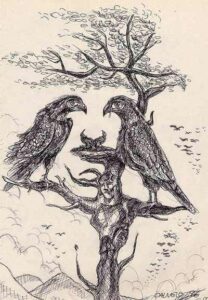
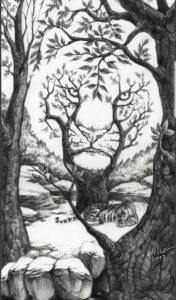
If you look closely, you may identify a toucan perched along a branch, a sloth hanging quietly from a limb, a snake coiled near the forest floor, a monkey partially concealed among the leaves, and a jaguar or leopard resting low in a shadowed corner. Some viewers immediately notice three animals, while others gradually discover more as their eyes adjust to the visual complexity. The variation in perception depends largely on attention, patience, and pattern recognition—not personality pathology.
Optical illusions like this jungle image work because the brain constantly interprets incomplete visual information. Our perception is shaped by experience, focus, and cognitive style. Some people scan broadly and quickly identify large shapes, while others concentrate on smaller details over time. Differences in what viewers see first reflect attentional patterns and visual processing, not moral character or personality disorders.
Ultimately, the jungle illusion is a playful exercise in perception rather than a psychological test. While it may spark self-reflection or conversation, it cannot measure narcissism or any other complex personality trait. The number of animals you see says more about how you observe the world in that moment than about who you are at your core.