These are the consequences of sleeping with the… See more
Read below
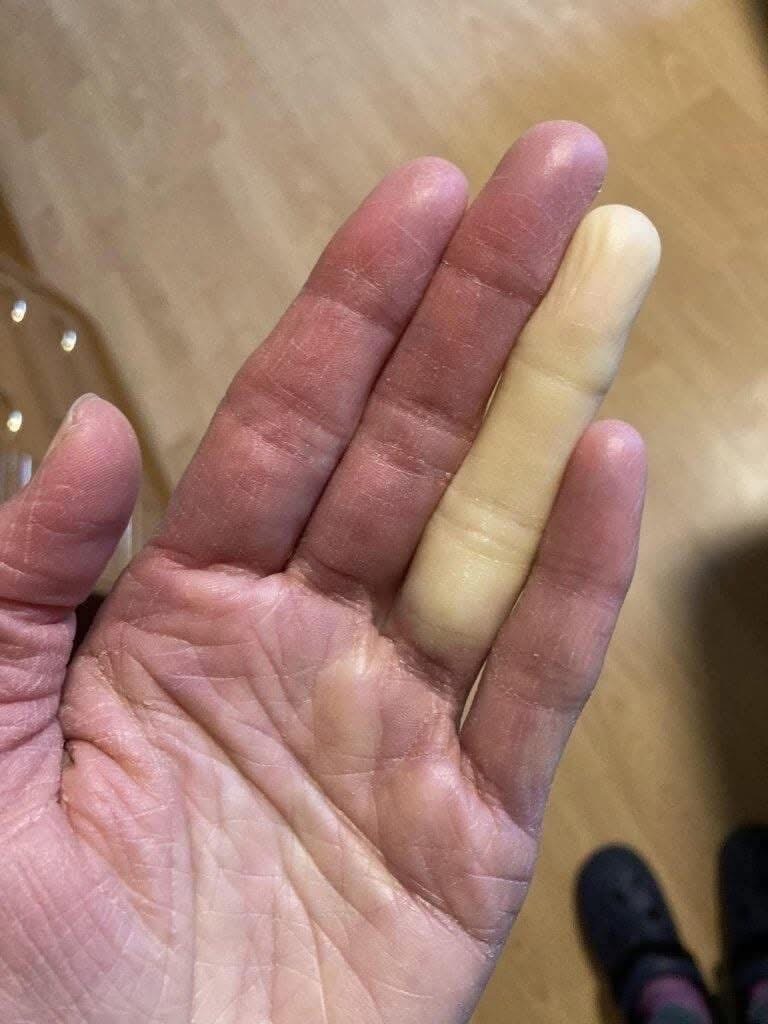
There are quiet consequences to sleeping the wrong way, consequences that don’t announce themselves with pain at first, but with silence. You wake up and notice that one finger—maybe the index, maybe the thumb—has lost its color. It looks pale, almost lifeless, as if the blood has temporarily forgotten how to reach it. The skin feels cold and чужно unfamiliar, like it no longer belongs to you.
This happens because during sleep, your body becomes careless. Your arm may be trapped beneath your weight, twisted at an unnatural angle, compressing nerves and blood vessels for hours. While you sleep peacefully, circulation slows, oxygen struggles to pass through narrowed pathways, and the nerves begin to protest quietly. By morning, the message arrives: numbness.
The hand may feel heavy, swollen, or completely disconnected, as if it were made of rubber or stone. Pins and needles follow shortly after—a sharp, electric sensation spreading through the fingers as blood rushes back in, aggressive and impatient. The whitening of the finger is temporary, but unsettling, a visual reminder that something essential was interrupted.
In some cases, the finger doesn’t just turn white—it feels empty. You try to move it, and it responds with delay, as if waking from a deep sleep of its own. This phenomenon is not dangerous most of the time, but it feels disturbing because it exposes how fragile the connection is between comfort and dysfunction.
Sleeping in the wrong position can momentarily turn your own body into a stranger. A simple mistake—an arm under a pillow, a wrist bent too far, a shoulder pressed into the mattress—can silence nerves and starve tissue of blood. And when you wake up, your hand tells the story before your mind does.
The body always remembers, even when you don’t.